Introduction
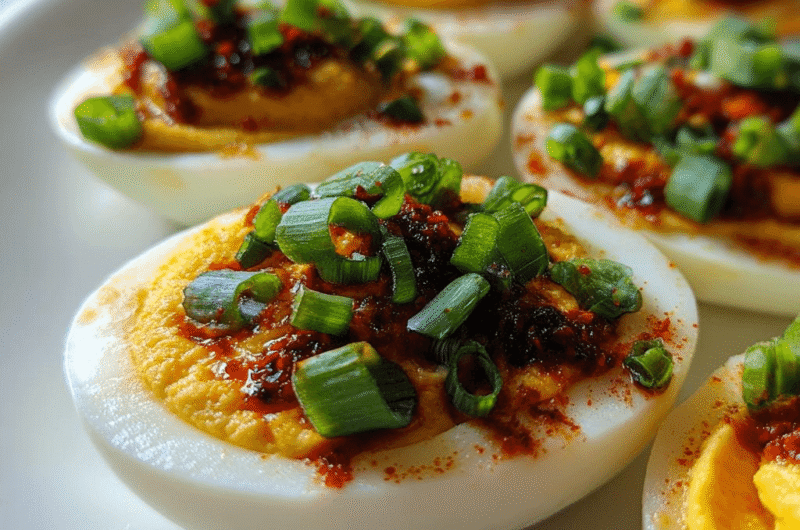
Deviled eggs are a classic appetizer loved for their creamy texture and simplicity. But what if you could elevate them with a punch of bold flavor? Enter Korean Gochujang, a fermented chili paste that adds a unique depth and a touch of spice. This twist on deviled eggs will impress your guests and make a memorable addition to any gathering.
In this recipe, the creamy yolk filling gets an exciting makeover with Gochujang, bringing a savory heat balanced by the sweetness of honey and the richness of mayonnaise. The crisp topping of sesame seeds and green onions adds both flavor and texture, ensuring every bite bursts with delightful complexity.
Ingredients
- 6 large eggs
Eggs are the main component of deviled eggs, providing a creamy and rich base when the yolks are mixed with other ingredients. The quality of your eggs can influence the final taste, so opt for fresh, large eggs. - 2 tablespoons Gochujang
This Korean chili paste adds a unique flavor profile with its fermented heat and slight sweetness, which transforms traditional deviled eggs into something extraordinary. It’s a key ingredient that delivers the bold twist. - 2 tablespoons mayonnaise
Mayonnaise brings moisture and creaminess to the filling, ensuring a smooth texture that balances the spiciness of the Gochujang. It also helps bind the ingredients together for a cohesive flavor. - 1 teaspoon honey
The honey adds a touch of sweetness, balancing the heat from the Gochujang. This sweetness enhances the overall flavor, making the filling both savory and delightful. - 1 teaspoon rice vinegar
Rice vinegar adds a bright acidity that lifts the richness of the yolk mixture. It contributes to the overall flavor profile and adds an enjoyable tang to the deviled eggs. - 1 tablespoon sesame seeds
Sesame seeds provide a nutty flavor and a pleasant crunch when used as a topping. They not only complement the filling but also enhance the visual appeal of the dish. - 1 green onion, finely sliced
Green onions add freshness and a mild onion flavor to the filling. Slicing them thin ensures they blend well into the mixture and can also be used as a colorful garnish. - Salt and pepper, to taste
Seasoning with salt and pepper helps to enhance the flavors of the filling. Adjusting to your taste preference ensures that the spices shine through without overwhelming the other ingredients.
Directions & Preparation
Step 1: Boil the eggs for 10-12 minutes.
Starting with boiling the eggs is crucial; use a large pot of water and bring it to a gentle boil. Once boiling, carefully add the eggs and allow them to cook. You want the yolks to be fully set but not overcooked, as overcooking can lead to a greenish-gray ring around the yolk, indicating a sulfur reaction.
Step 2: Remove eggs and cool in ice water.
After boiling, promptly transferring the eggs to an ice water bath is essential. This stops the cooking process, making sure the yolks remain creamy. Cooling the eggs also makes them easier to peel, preventing frustrating shell fragments from clinging to the egg.
Step 3: Peel the eggs and halve them lengthwise.
Once cool, gently tap the eggs against a hard surface to crack the shell, then peel under running water for a smooth finish. Halving them lengthwise separates the yolks and whites, preparing them for the filling. Be cautious as the whites can tear if not handled carefully.
Step 4: Scoop out the yolks into a bowl.
Using a small spoon or a piping bag, carefully extract the yolks from each egg half and place them in a mixing bowl. This step matters because the creaminess of the yolk is what will ultimately create your filling, and any extra bits of egg white can alter the texture.
Step 5: Mix yolks with Gochujang, mayonnaise, honey, and vinegar.
Here’s where the magic happens. Mix the yolks with the Gochujang, mayonnaise, honey, and rice vinegar until smooth. This step is crucial for combining flavors; you want a uniform mixture that achieves the right balance of sweet, spicy, and savory.
Step 6: Season with salt and pepper; taste for balance.
After combining the filling ingredients, it’s important to taste and adjust the seasoning with salt and pepper. This step is vital, as it ensures that the filling has the right level of flavor and is not bland. Adjust accordingly to make the flavor pop.
Step 7: Pipe or spoon the filling into the egg whites.
Transfer the yolk mixture into a piping bag or use a spoon to fill the egg white halves. Piping gives a more polished look and ensures even distribution, which enhances presentation. If you don’t have a piping bag, a zip-top bag with a corner snipped off works just as well.
Step 8: Top with sesame seeds and green onions.
Sprinkling sesame seeds and green onions on top not only boosts flavor but also enhances the visual appeal. These toppings add a crunchy texture and vibrant color, making your deviled eggs more enticing.
Step 9: Chill before serving to let flavors meld.
Allow the filled eggs to chill in the refrigerator for at least 15-30 minutes. Chilling not only firms up the filling but also lets the flavors meld beautifully, intensifying the overall taste experience when served.

Exploring Gochujang: The Flavor Revolution
Gochujang, a staple in Korean cuisine, is more than just a chili paste. Its unique combination of spicy, sweet, and savory flavors makes it a versatile addition to countless dishes. By incorporating Gochujang into deviled eggs, you're not only honoring Korean culinary traditions but also introducing your palate to a flavor revolution. The fermentation process lends depth, making your appetizer stand out.
Creative Tweaks: Your Deviled Eggs, Your Way
While this recipe pays homage to Gochujang, don’t hesitate to make it your own. Consider adding other ingredients like avocado for creaminess or a splash of lime for an additional zest. The beauty of deviled eggs lies in their adaptability; variations can cater to your taste preferences, dietary needs, or seasonal availability of ingredients. Experimentation can lead to delightful surprises.
Perfect Pairings: Elevating Your Appetizer Game
These Korean Gochujang deviled eggs can be paired with various beverages and dishes to elevate your appetizer experience. A crisp, cold lager or a fruity white wine complements the heat nicely, while casual sides like veggie platters or Asian-inspired salads enhance the overall meal. Embrace this fusion by serving alongside Korean BBQ or noodles for a cohesive flavor journey.
FAQs
What if the filling is too thick?
If the filling is too thick, stir in a few drops of water or additional mayonnaise to achieve a smoother texture. It's important to avoid making it too loose, so adjust gradually.
How can I boost the spiciness without overpowering?
To gently increase the heat, add an extra half teaspoon of Gochujang while mixing the filling. Taste frequently to ensure the flavors remain balanced.
What can I do if the eggs are overcooked?
If the yolks have turned greenish due to overcooking, counteract this by adding a tablespoon of sour cream to the mixture, which will improve creaminess and flavor while masking undesired coloration.
Is there a gluten-free alternative for other ingredients?
Ensure that your mayonnaise and Gochujang are gluten-free; many brands are naturally gluten-free, but always check labels to be certain.
Can I use sriracha instead of Gochujang?
Yes, sriracha can work as a substitute; however, it will yield a different flavor and sweetness level. Adjust the honey accordingly so that sweetness remains in balance.
Can I make these eggs less spicy?
To reduce spiciness, simply decrease the amount of Gochujang or add more mayonnaise to soften the heat. Tasting as you go will help maintain the desired flavor profile.
What if my filling tastes bland?
If the mixture feels bland, consider adding a pinch more salt, a splash of vinegar, or an extra drizzle of honey to enhance the overall flavor.
Conclusion
Korean Gochujang deviled eggs are a striking and flavorful alternative to traditional recipes, making them a perfect fit for any occasion. You’ll not only impress your guests with a dish that boasts both originality and taste, but you’ll also introduce them to a delightful culinary experience.
By experimenting with flavors and textures, you can create a memorable appetizer that stands out on any table. So gather your ingredients, roll up your sleeves, and enjoy the vibrant tastes of Korea right from your kitchen.
Recipe Card
Notes
Additional serving suggestions: pair with a crisp salad, garlic bread, or roasted seasonal vegetables for balance.
For make-ahead, prep components separately and assemble just before heating to preserve texture.
Taste and adjust with acid (lemon/vinegar) and salt right at the end to wake up flavors.