
Introduction
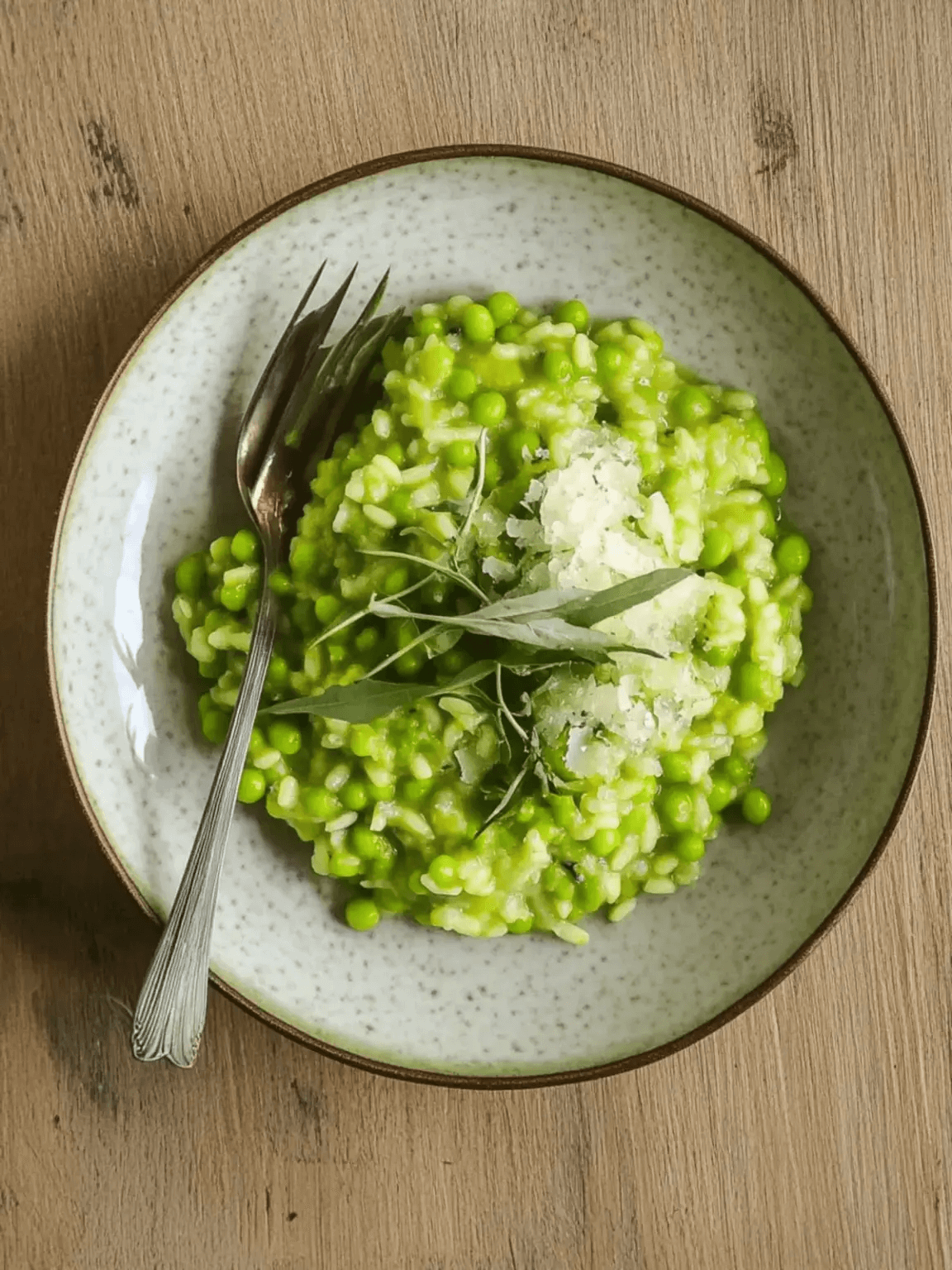
Risotto, often considered the epitome of Italian comfort food, can transform into exciting new flavors with just a few tweaks. This creamy pea risotto with wild garlic brings a vibrant freshness to your table, capturing the essence of spring with every bite. The sweetness of peas combined with the aromatic punch of wild garlic creates a harmonious balance that elevates this classic dish.
Cooking risotto requires patience and technique, but the reward is a luxurious dish that feels gourmet yet is achievable at home. By incorporating seasonal ingredients like peas and wild garlic, not only does it add a delightful twist, but it also ensures that you’re making the most of fresh produce. This dish proves that with quality ingredients and a little care, you can create something truly special.
Ingredients
- 1 cup Arborio rice
Arborio rice is key to achieving the creamy texture characteristic of risotto. Its high starch content allows it to absorb liquids gradually, creating a rich, velvety consistency. - 4 cups vegetable broth
Vegetable broth acts as the cooking liquid for risotto, infusing the dish with flavor. A homemade or good quality store-bought broth can greatly enhance the overall taste. - 1 cup fresh peas
Fresh peas add a natural sweetness and vibrant color to the dish. They also offer a crunchy texture that contrasts beautifully with the creamy risotto. - 1/2 cup wild garlic (finely chopped)
Wild garlic introduces a unique, mild garlic flavor along with a fresh herbal note. It's often found in wooded areas during spring and can elevate the dish's complexity. - 1 medium onion (finely chopped)
The onion serves as a base flavor in risotto, providing sweetness and depth as it cooks down. It acts as the aromatic foundation for the entire dish. - 2 tablespoons olive oil
Olive oil is used for sautéing the onions and adds a lush mouthfeel to the risotto. It enhances the flavor profile and enriches the dish without overpowering the other ingredients. - 1/2 cup Parmesan cheese (grated)
Parmesan adds an essential umami flavor and creaminess to the risotto. Grating it finely allows it to melt smoothly into the rice, enhancing the overall richness. - Salt and pepper to taste
Seasoning is crucial for balancing flavors. Salt enhances the natural ingredients, while pepper adds a subtle heat that rounds out the dish. - 1 tablespoon lemon juice
Lemon juice brightens the flavors in risotto, offering a needed acidity that cuts through the creaminess, making the dish refreshing and lively.
Directions & Preparation
Step 1: Prepare the broth.
Begin by warming the vegetable broth in a saucepan over low heat. Keeping the broth warm is essential as it helps the rice cook evenly and prevents it from going cold, which would slow down the cooking process. The gradual addition of warm liquid ensures the rice releases its starches properly, achieving that desired creamy texture.
Step 2: Sauté onion in olive oil.
In a large skillet or saucepan, heat the olive oil over medium heat. Add the finely chopped onion and sauté until translucent, about 3-4 minutes. Cooking the onion slowly allows it to caramelize slightly, developing a sweet foundation for the risotto. This step is crucial because it builds the dish's depth of flavor, which will be the backdrop for the other ingredients.
Step 3: Add rice and toast.
Next, incorporate the Arborio rice into the pan with the sautéed onion, stirring to coat the grains in the oil. Toast the rice for about 2 minutes until it becomes slightly transparent. This step locks in flavor and helps to create a nutty aroma. Toasting the rice also prevents it from becoming mushy in the cooking process.
Step 4: Deglaze with broth gradually.
Start adding the warm vegetable broth to the rice one ladleful at a time, stirring continuously. Wait until the liquid is mostly absorbed before adding the next ladle. This gradual incorporation is vital for developing the creamy consistency of risotto. The constant stirring helps release the rice's starches, creating a delightful creaminess.
Step 5: Add peas and wild garlic.
Once the rice is about halfway cooked (after approximately 10-12 minutes), stir in the fresh peas and chopped wild garlic. The addition of these fresh ingredients adds flavor and texture while enhancing the dish's brightness. Allow the risotto to continue cooking until the rice is al dente and the peas are tender, about another 5-7 minutes.
Step 6: Finish with cheese and lemon.
Once the rice reaches the perfect creamy consistency and is cooked through, remove the pan from heat. Stir in the grated Parmesan cheese and a splash of lemon juice. This step enriches the risotto and adds a layer of zestiness that elevates the overall dish. Adjust seasonings with salt and pepper according to your taste, creating a harmonious blend.
Step 7: Serve immediately.
Risotto is best enjoyed fresh from the stove, as it can lose its creamy texture if allowed to sit. Spoon portions into bowls, garnishing with extra peas or wild garlic if desired. Serving it hot ensures that the flavors are at their peak, providing a delightful experience that embodies the essence of spring dining.
The Importance of Fresh Ingredients
Using fresh ingredients is paramount in any risotto, but with this creamy pea risotto, it truly makes a difference. Fresh peas add sweetness, while wild garlic contributes a unique aroma and flavor that dried herbs simply cannot replicate. When approached with the essence of spring in mind, choosing the best produce available helps create not just a dish, but an experience that celebrates seasonal eating.
Risotto Texture: The Perfect Al Dente
Achieving the right texture in risotto is an art. The goal is to have a creamy consistency while the rice retains a slight bite—al dente. Watching for this cue is crucial: if you taste the rice and it feels mushy, it’s overcooked, but if it’s too tough, it needs more time and liquid. By focusing on this texture, you'll elevate your risotto from just a meal to a standout dish.
Pairing Suggestions
While creamy pea risotto stands confidently on its own, considering pairing options can elevate your dining experience. A light, crisp white wine—such as a Sauvignon Blanc or Pinot Grigio—can complement the dish's vegetables beautifully. Additionally, a simple side salad with a vinaigrette can act as a refreshing counterbalance to the creaminess, making for a well-rounded meal.
FAQs
What if my risotto turns out too thick?
If your risotto is too thick, simply add more warm broth, a little at a time, and stir until it reaches the desired creamy consistency. Remember, risotto should be served somewhat loose.
How do I make this risotto vegetarian without cheese?
To make a vegetarian version without cheese, use nutritional yeast for a cheesy flavor or simply omit cheese entirely for a lighter dish. Adjust the seasoning to maintain flavor.
Why does my risotto taste bland?
If your risotto tastes bland, it may lack sufficient seasoning. Always taste the dish towards the end of cooking and add more salt, pepper, or even a squeeze of lemon to enhance flavors.
Can I swap out the wild garlic for something else?
If wild garlic isn't available, feel free to substitute it with regular garlic or mild green herbs like chives or leeks for a different flavor profile.
How do I prevent my risotto from sticking to the bottom of the pan?
Stirring frequently and using a heavy-bottomed pan can help prevent sticking. Additionally, ensuring your heat is medium and not too high can avoid scorching.
Can I use frozen peas instead of fresh?
Yes, frozen peas can be used in a pinch. They will cook quickly and add sweetness, though fresh peas provide a brighter flavor and texture.
Conclusion
Creamy pea risotto with wild garlic is one of those dishes that captures the essence of spring while showcasing the beauty of simple ingredients. Taking the time to carefully create this risotto will reward you with a comforting meal that feels indulgent yet wholesome.
Every bite is an invitation to enjoy the flavors of the season, and with its inviting aroma and creamy texture, this risotto will undoubtedly become a favorite in your culinary repertoire. Share it with friends or enjoy it as a quiet dinner; it's versatility makes it perfect for any occasion.
Recipe Card
Notes
Additional serving suggestions: pair with a crisp salad, garlic bread, or roasted seasonal vegetables for balance.
For make-ahead, prep components separately and assemble just before heating to preserve texture.
Taste and adjust with acid (lemon/vinegar) and salt right at the end to wake up flavors.