
Introduction
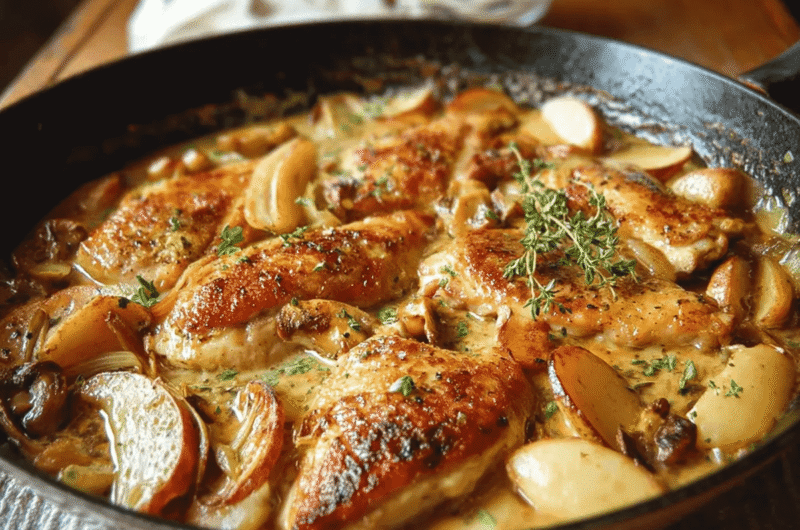
Chicken Normandy, or French Apple Cider Chicken, celebrates the rich culinary traditions of Normandy, nestled in the heart of France. This dish masterfully balances the savory essence of chicken with the natural sweetness of apples and the depth of apple cider, creating an inviting harmony on the plate.
The combination of these ingredients reflects the region's agricultural bounty, where apples thrive and cider-making is an art form. Whether you are entertaining guests or enjoying a quiet family dinner, Chicken Normandy offers a touch of elegance and comfort that makes every meal memorable.
Ingredients
- 4 bone-in, skin-on chicken thighs
Chicken thighs offer rich flavor and moisture, ensuring a tender result that perfectly absorbs the sauce. - 2 tablespoons olive oil
Olive oil not only provides a medium for cooking but also adds a subtle, fruity flavor that complements the other ingredients. - 1 medium onion, finely chopped
Onions create a savory base for the dish, caramelizing beautifully to enhance the overall depth of flavor. - 2 cloves garlic, minced
Garlic adds a pungent, aromatic character while also enriching the dish with its culinary versatility. - 1 cup apple cider
Apple cider infuses the dish with sweetness and acidity, creating a well-rounded sauce that enhances the chicken. - 2 medium apples, peeled, cored, and sliced (e.g., Granny Smith or Honeycrisp)
Apples contribute a sweet-tart contrast that brightens the flavors, balancing the richness of the sauce. - 1 cup chicken broth
Chicken broth provides a savory backdrop that adds moisture while infusing the dish with additional flavor. - 1 tablespoon Dijon mustard
Dijon mustard introduces a tangy bite that cuts through the richness, enhancing the overall taste profile. - 1 teaspoon dried thyme
Dried thyme lends an earthy aroma and flavor, evoking the herbaceous notes typical of French cuisine. - Salt and pepper to taste
Seasoning with salt and pepper at various stages helps build flavor, ensuring the dish is well-balanced.
Directions & Preparation
Step 1: Heat the olive oil in a large skillet over medium-high heat.
Heating the olive oil is critical for achieving a good sear on the chicken. A hot pan helps to create a golden, crispy skin while locking in moisture, which is essential for flavor.
Step 2: Season the chicken thighs with salt and pepper and place them skin-side down in the skillet.
Seasoning the chicken before adding it to the skillet ensures the flavors penetrate the meat. Placing it skin-side down allows the skin to crisp up nicely, providing texture that's satisfying.
Step 3: Cook the chicken for about 5-7 minutes until golden brown, then flip and cook for another 5 minutes.
This step is key for developing flavor through the Maillard reaction, which occurs when proteins and sugars react under heat, creating complex flavors and a visually appealing color.
Step 4: Remove the chicken from the skillet and set aside.
Setting the chicken aside helps to manage the timing of the cooking process for the other ingredients, preventing overcooking. It also allows for layering flavors in the next steps.
Step 5: Add the chopped onion to the skillet and sauté until translucent, about 3-4 minutes.
Sautéing the onion releases its natural sugars and flavors, providing a sweet and aromatic base for the sauce. Cooking until translucent prevents bitterness and ensures a mellow flavor.
Step 6: Add the minced garlic and cook for 1 minute until fragrant.
Garlic cooks quickly, so adding it after the onion allows it to release its essential oils without burning, which can lead to a harsh flavor.
Step 7: Pour in the apple cider and chicken broth, stirring to combine.
This deglazes the pan, lifting those golden bits stuck to the bottom, and forms the initial base of the sauce, ensuring all the flavors meld beautifully.
Step 8: Whisk in the Dijon mustard and dried thyme.
Incorporating mustard at this stage helps to meld the flavors in the sauce while adding a sharp tang, enhancing the overall taste without overwhelming the dish.
Step 9: Return the chicken to the skillet, skin-side up, and nestle the apple slices around it.
Positioning the chicken skin-side up ensures that the skin stays crispy while the apples cook down and infuse the sauce with their sweetness, creating a cohesive dish.
Step 10: Cover the skillet and simmer on low for 25-30 minutes until the chicken is cooked through.
Simmering allows the chicken to cook gently and absorb the flavors of the cider and apples, ensuring it remains succulent while the sauce thickens.
Step 11: Remove the lid and cook for an additional 5-10 minutes to thicken the sauce if desired.
This step enriches the sauce consistency, concentrating the flavors. A thicker sauce clings better to the chicken and apples, enhancing each bite.
Step 12: Taste and adjust seasoning with salt and pepper as needed before serving.
Tasting at this stage is crucial for achieving a balanced flavor. Adjusting seasoning ensures that the dish has the right amount of saltiness to complement the sweetness of the apples.
The Role of Apples in Chicken Normandy
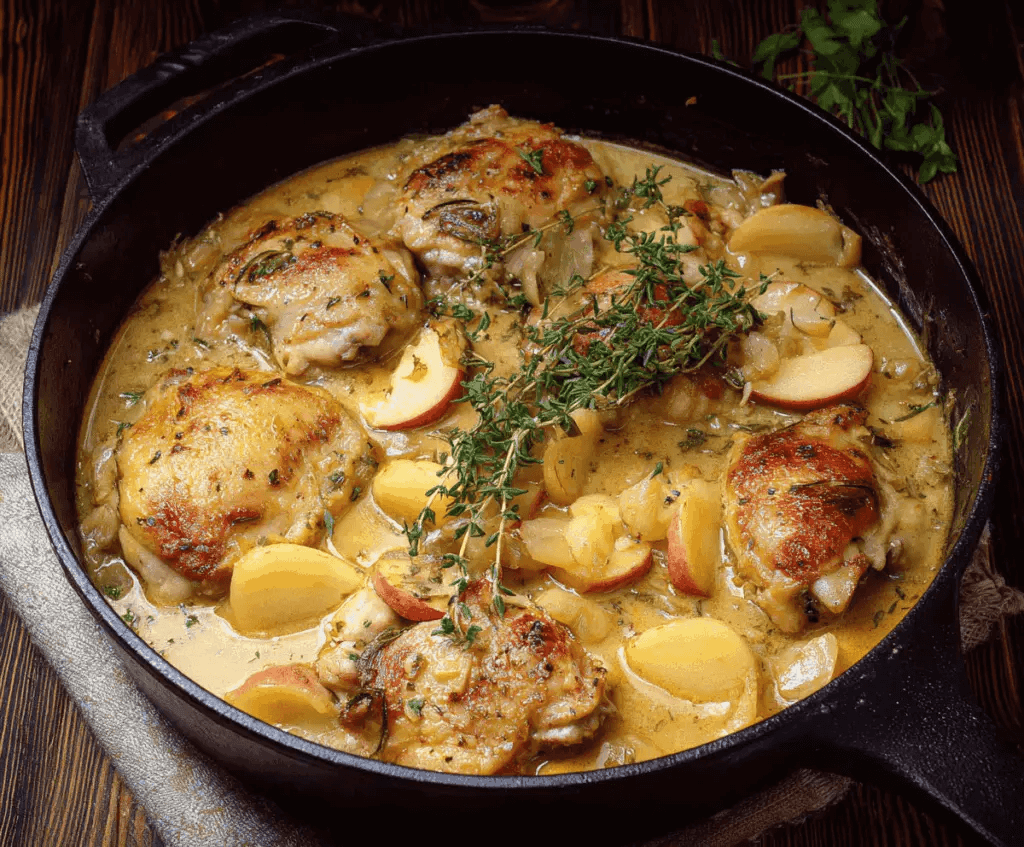
Incorporating apples into Chicken Normandy not only enhances its flavor profile but also adds a visually appealing element to the dish. Apples bring a certain crispness and sweetness, which balances the savory elements of the dish, turning a simple chicken meal into an extraordinary experience. Choosing the right variety, such as Granny Smith for tartness or Honeycrisp for sweetness, allows you to customize the dish to your liking.
Cider's Transformative Power
Apple cider is the heart of Chicken Normandy, infusing the dish with a sweet yet tangy depth. Its acidity helps to tenderize the chicken while adding a robust flavor that marries well with the accompanying ingredients. By selecting a high-quality, not-too-sweet cider, you can elevate the dish, allowing the complexity of flavors to shine through.
Making It Your Own
One of the joys of cooking Chicken Normandy is the opportunity to personalize it. You can experiment with different herbs or add other ingredients such as mushrooms or carrots, which can enhance the dish's texture and flavor. This adaptability allows for creativity in the kitchen, transforming a classic dish into something uniquely yours.
FAQs
What can I do if the sauce turns out too thin?
If your sauce is too thin, continue simmering it uncovered over low heat to allow excess liquid to evaporate, thickening the sauce.
Can I use boneless chicken thighs for this recipe?
Yes, boneless chicken thighs can be used; just reduce the cooking time slightly, as they cook more quickly than bone-in pieces.
What should I do if my apples are too soft after cooking?
If your apples become too mushy, add them partway through cooking next time, or opt for a firmer variety that holds up better.
How can I enhance the dish's flavor if it tastes bland?
To enhance flavor, add a splash more cider for acidity or a pinch of sugar to balance out the sweet and savory notes.
How can I adjust the recipe for a smaller portion?
To scale down the recipe, simply halve the ingredients while keeping the cooking times similar; adjust as necessary based on the size of the chicken pieces.
What if I want a bit more spice?
For extra spice, consider adding pinch of red pepper flakes or a splash of cayenne pepper to the sauce as it simmers.
Conclusion
Chicken Normandy offers a delightful glimpse into French culinary tradition, marrying the flavors of savory chicken with aromatic apples and fresh cider. Its versatility allows every home cook to put a personal touch on a timeless dish.
As you create this meal, take the opportunity to savor the process—each step unfolds a new layer of flavor, leading to a rewarding dining experience that you and your loved ones will cherish.
Recipe Card
Notes
Additional serving suggestions: pair with a crisp salad, garlic bread, or roasted seasonal vegetables for balance.
For make-ahead, prep components separately and assemble just before heating to preserve texture.
Taste and adjust with acid (lemon/vinegar) and salt right at the end to wake up flavors.